

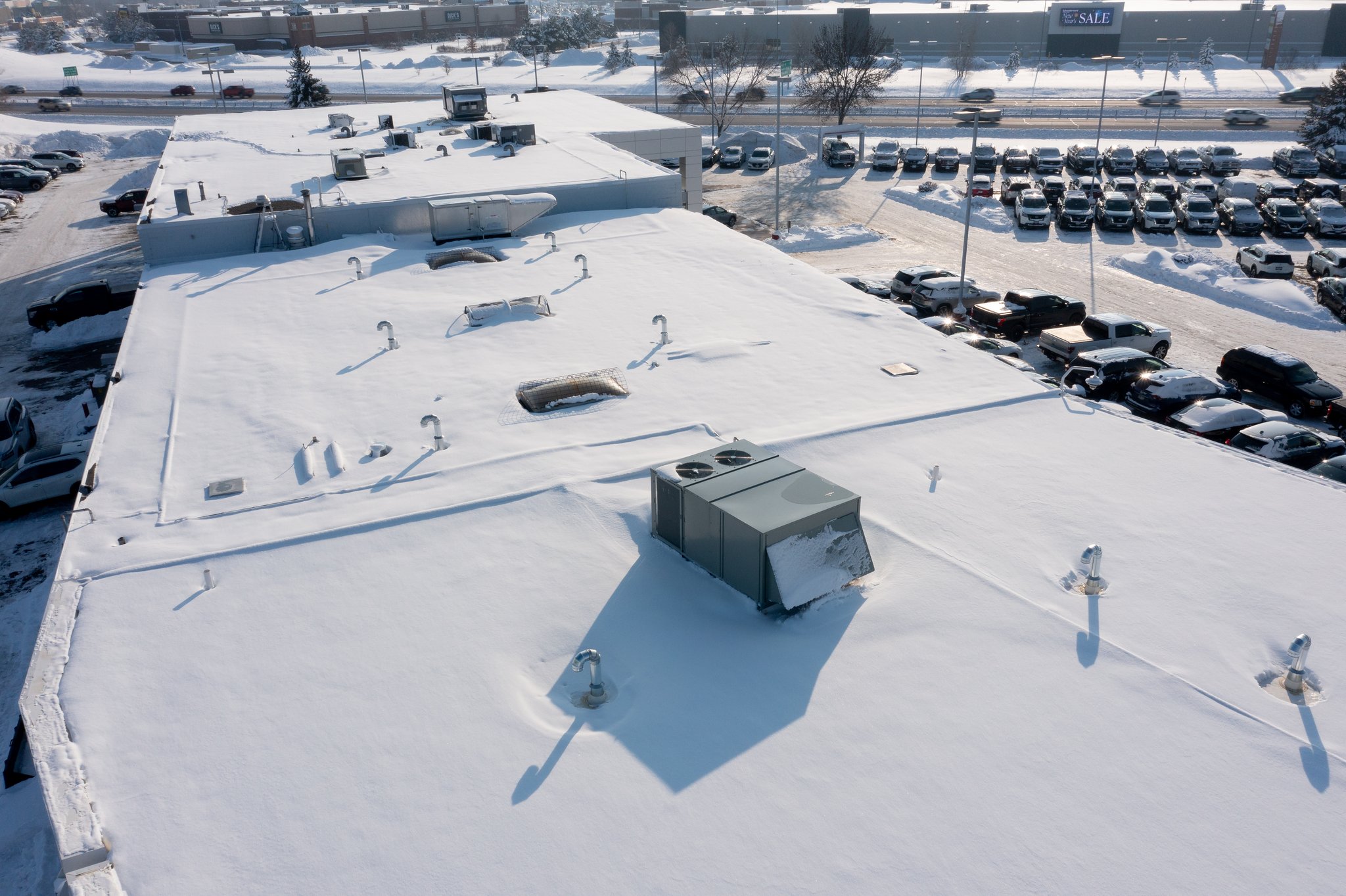
Documentation and adjuster coordination for commercial roof damage caused by Pacific winter storms, wind-driven rain, and Santa Ana wind events across San Diego County.
Request a quoteWind and wind-driven rain are the peril most likely to put a San Diego commercial roof into an insurance claim. The county does not see hurricanes and rarely sees hail, but Pacific winter storm systems moving through between December and March bring sustained wind and heavy rain, and offshore Santa Ana wind events — usually in fall and early winter — bring dry, gusty wind from the opposite direction that stresses roof edges, coping, and rooftop equipment in a different way.
Winter storm systems push wind-driven rain against parapet walls, roof-to-wall transitions, and any open lap or seam, and standing water finds the weak point fast on a low-slope commercial roof. Santa Ana events work differently: they are dry, they arrive with sustained gusts and stronger peaks, and they tend to hit hardest on inland and foothill buildings in Escondido, Poway, Santee, Rancho Bernardo, and El Cajon, where wind can lift loose edge metal, coping caps, and poorly secured rooftop equipment screens well before any rain falls.
Wind damage on a commercial roof rarely announces itself as dramatically as it does on a house. We look for lifted or creased membrane at the perimeter, loose or missing coping and edge metal, opened laps and seams, displaced pavers or ballast, damaged rooftop unit curbs and screens, and torn or punctured membrane from wind-blown debris. A membrane that looks intact from the ground can still have a lifted seam that lets water track laterally under the roof before it shows up as an interior leak.
Wind-driven rain claims are harder to document than a single obvious tear because the water entry point and the visible interior leak are often not in the same place. We trace the path — checking drains, scuppers, wall flashing, and penetrations along the way — so the documentation shows where the water actually entered, separate from where it later showed up inside the building.
Buildings along the coast — Point Loma, Ocean Beach, Pacific Beach, La Jolla, Coronado, and Imperial Beach — carry an added factor: salt-laden air accelerates corrosion on fasteners, edge metal, gutters, and rooftop equipment. A wind event can finish off a fastener or seam that salt air had already weakened over years, which makes it important to document the difference between long-term corrosion and acute storm damage when a claim is filed.
Hurricane Hilary in August 2023 is worth a brief factual mention here: the storm's remnant moisture brought San Diego County an unusually large amount of summer rainfall in a short window, catching some buildings without properly cleared drains or scuppers. It was a rare event, not the region's typical storm pattern, but it is a reminder that any roof drainage system with debris or standing water going into a rain event is more exposed than one that has been recently maintained.
For a wind or wind-driven rain claim, we photograph the perimeter first — coping, edge metal, parapet caps — since that is where wind damage usually starts. We then document drains and scuppers, penetrations, rooftop equipment curbs, and any interior ceiling or wall staining, along with wind data for the date in question when it is available. Measurements of lifted or displaced membrane sections give the adjuster a defined area rather than a general description.
We separate what the wind event caused from what was already deteriorating. A roof with existing UV-brittle membrane or old patch work can look more damaged after a wind event even if the storm only affected a portion of it, and an accurate claim depends on being clear about that boundary.
Wind and storm claims often move faster when we can walk the roof with the adjuster directly, point to the specific mechanism of failure — a lifted seam, a torn membrane edge, a displaced coping cap — and explain how it ties to the wind event on record. We document and explain; we do not negotiate the claim or represent you to the carrier.
Yes. Winter storm systems bring sustained wind and heavy rain, and offshore Santa Ana wind events bring strong dry gusts, especially inland. Both can lift roof edges, coping, and loose equipment, particularly on roofs with prior wear or deferred maintenance.
Wind-driven rain often enters at a roof edge, parapet, or wall transition and travels before it shows up as an interior leak, so the visible ceiling stain may be well away from the actual entry point. We trace the path during inspection rather than assuming the leak is directly overhead.
Hilary's remnant moisture brought unusually heavy summer rainfall to the region in August 2023. Some buildings with clogged drains or scuppers saw water intrusion as a result. It was an atypical event compared to San Diego's normal storm pattern, which is concentrated in the winter months.
Santa Ana winds are dry, offshore, and gusty, and tend to hit inland and foothill areas hardest, lifting loose edge metal, coping, and equipment screens without accompanying rain. Winter storms combine wind with heavy rain, which tests drainage and sealed details as much as wind resistance.
It can complicate the file if corrosion and storm damage are not separated. We document ongoing salt-air wear apart from the specific damage tied to a wind event so the claim reflects what the storm actually caused.
If it is safe to do so from ground level, photos of any visible roof debris, loose material on the ground, or interior water stains are useful. We do not recommend going onto the roof after a wind event without a professional inspection first.
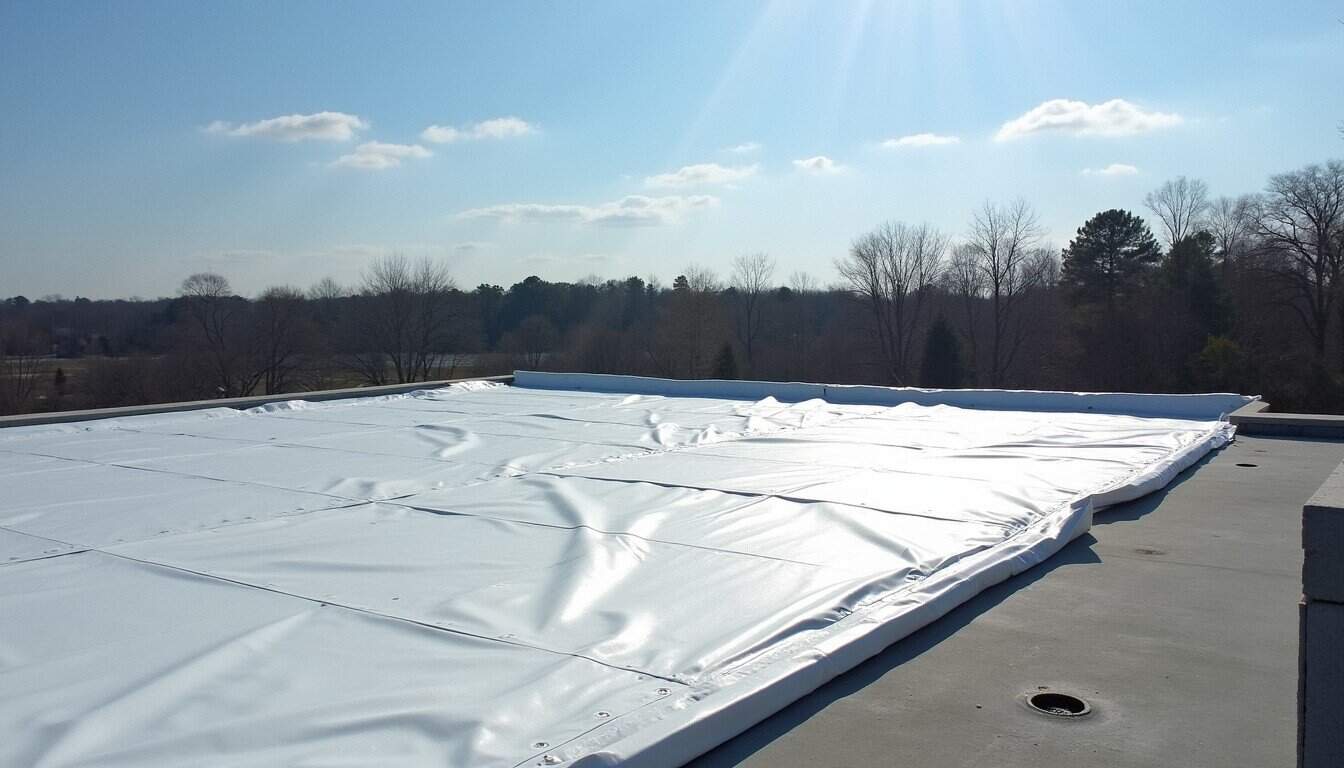
We check coping, edge metal, parapets, drains, and penetrations first, since that is where wind and wind-driven rain damage typically begins on a San Diego low-slope roof.
Start a Request
Santa Ana wind events hit inland San Diego County hardest; winter storms bring the wind-driven rain that tests drainage and seams.
Coastal buildings need corrosion and storm damage documented separately so the claim reflects only what the wind event caused.
Perimeter, coping, and edge metal inspected first
Wind-driven rain paths traced to the true entry point
Documentation ready for your adjuster's site visit