

Roof inspection, damage documentation, and adjuster coordination for San Diego commercial property owners working through an active or pending roof insurance claim.
Request a quoteA commercial roof insurance claim usually starts the same way in San Diego: a leak shows up after a winter storm, a tenant reports water coming through a ceiling tile, or a lender requires a roof condition report before a policy renews. What happens in the first two weeks after that discovery often decides whether the claim covers the true scope of the damage or gets trimmed down to a patch.
We are a commercial roofing contractor, not a public adjuster. Our role is to get on the roof, document what we find, and put a repair or replacement scope in front of you and your adjuster that reflects the roof's actual condition — not a guess made from the ground or from a photo taken through a drone flyover.
San Diego's commercial roof stock varies enough that a generic claim checklist rarely fits. Sorrento Valley and Sorrento Mesa carry a dense concentration of biotech, lab, and office roofs tied to the Torrey Pines and UC San Diego research corridor, many with mechanical penthouses, exhaust stacks, and fume-hood curbs that complicate both damage assessment and repair sequencing. Kearny Mesa mixes office, auto, and light-industrial roofs with heavy rooftop equipment loads. Otay Mesa and East Otay Mesa carry large logistics and distribution roofs where a single membrane failure can affect tens of thousands of square feet of leased space. The port and shipyard corridor around Barrio Logan, the Tenth Avenue Marine Terminal, and the National City Marine Terminal puts industrial roofs under near-constant salt air and vibration. Each of those roof types produces a different claim file.
Most carriers want the same underlying evidence regardless of building type: dated photographs of the damage, a description of the cause (wind, wind-driven rain, or another covered peril), measurements of the affected area, and a scope of repair or replacement tied to that damage. We build that file on the roof, not after the fact from memory or a handful of phone photos.
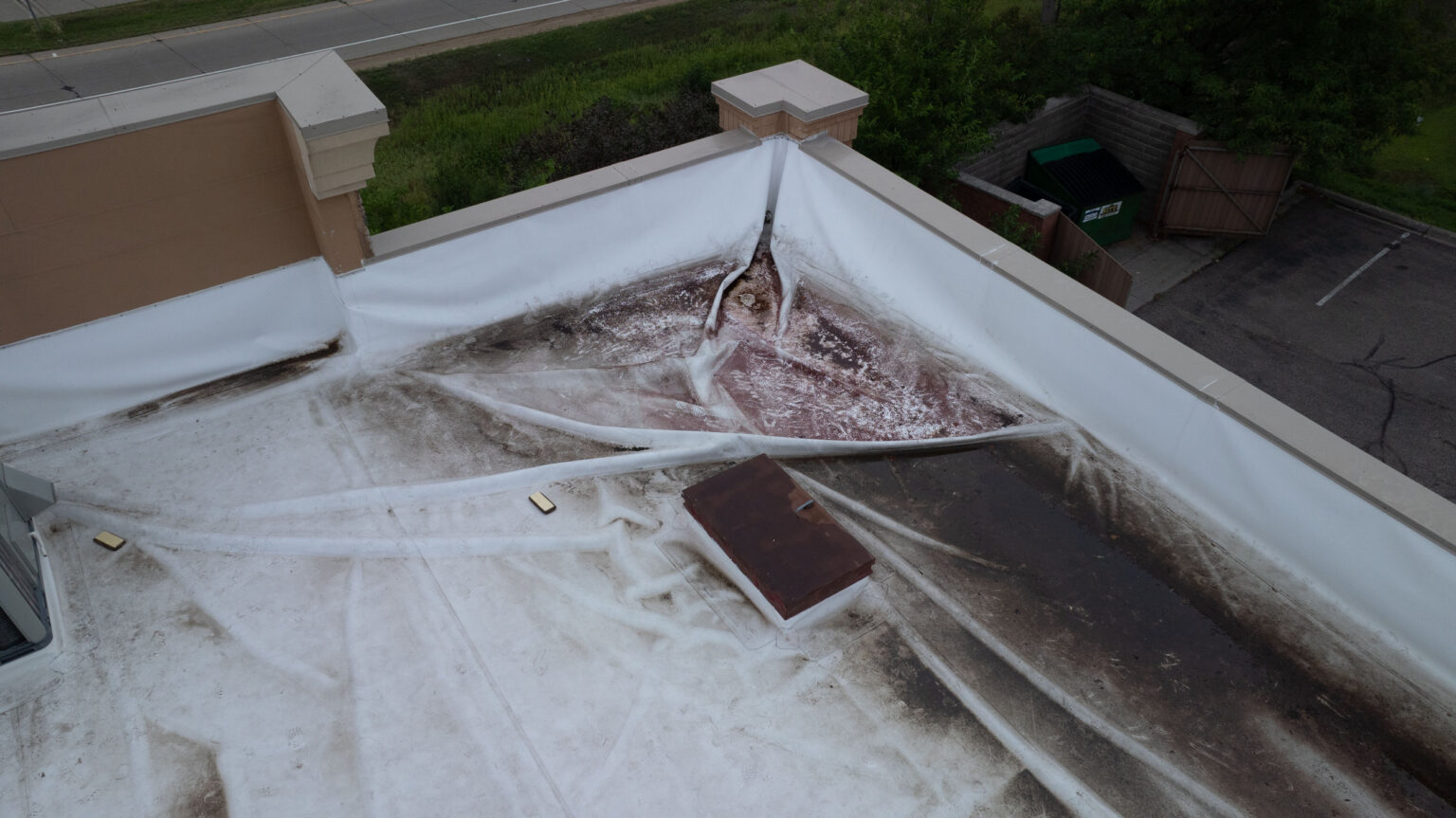
Photo documentation for a commercial roof claim needs to show more than the leak itself. We photograph the roof field, the membrane laps and seams, flashing and coping details, drains and scuppers, penetrations, and any storm debris still on the roof, along with wide shots that establish scale and location. Moisture readings on the deck and insulation matter as much as surface photos — a wet membrane with dry insulation underneath is a very different repair than a saturated insulation package that has to come off the deck.
We keep the documentation tied to specific roof areas rather than one general description of "roof damage." An adjuster reviewing a 40,000-square-foot Otay Mesa warehouse roof or a Sorrento Valley lab roof needs to see which sections are affected, which are not, and why the line is drawn where it is. That level of detail is what turns a disputed claim into an approved one.
When an adjuster schedules a site visit, we try to be there. Walking the roof together lets us point directly at the damage, explain what caused it, and answer questions about the assembly, the age of the membrane, and prior repair history in real time. It also gives the adjuster a technical read on the roof from someone who works on roofs for a living, which tends to move the process faster than a written report alone.
We do not negotiate the claim or represent you to the carrier. That is the owner's role, or a public adjuster's role if one is retained. What we bring to that meeting is the roofing knowledge: which conditions are storm-caused, which are pre-existing wear, and what a proper repair actually requires.
Underpaid claims are often underpaid because the original scope was incomplete, not because the carrier acted in bad faith. A wind event that lifts perimeter metal or opens a seam rarely stays contained to the exact spot where water is visible inside the building. We look at the whole roof system — edge metal, coping, parapet walls, curbs, drains, and adjacent membrane — so the scope accounts for code-required upgrades, matching material where partial replacement would leave mismatched membrane, and secondary damage the adjuster's initial walk might not catch from ground level or a single vantage point.
This matters more in California right now than it did a decade ago. The state's property insurance market has tightened — several major carriers have pulled back or non-renewed commercial policies, more buildings are landing in the FAIR Plan or surplus lines market, and insurers that remain are scrutinizing roof age and condition closely before binding or renewing coverage. A claim scope that is thin, vague, or missing supporting documentation is more likely to get pushback in this market than it might have a few years ago.
When a claim is denied outright or the approved scope falls short of what the roof needs, we can go back up, re-inspect the disputed areas, and put together supplemental documentation — additional photos, moisture readings, or a revised scope narrative — for you or your adjuster to submit. We cannot guarantee a different outcome and we do not act as your advocate in the appeal process, but a more complete roof record is usually the difference between a second look and a closed file.
Repair-versus-replacement is one of the most common disputes. A carrier may authorize a patch where the roof's age, prior repair history, and the extent of the current damage point toward a full section replacement being the more defensible long-term outcome. We document the roof's actual condition — membrane brittleness, prior patch density, deck condition where accessible — so that argument is backed by field evidence rather than opinion.
Buildings near San Diego Bay, Point Loma, Coronado, La Jolla, and Imperial Beach carry an added documentation layer: salt-air corrosion on exposed metal, fasteners, and rooftop equipment can accelerate storm damage or make it harder to isolate what a specific storm event caused versus what was already aging before the storm. We note baseline corrosion separately from acute storm damage so the claim file distinguishes the two.
Most commercial property policies cover roof damage caused by a covered peril such as wind or wind-driven rain, but coverage terms vary by policy — some California commercial policies now carry actual cash value (ACV) roof endorsements rather than full replacement cost, especially on older roofs. We document the physical condition and cause of loss; your policy language and your adjuster determine what is covered.
Typically: report the loss to your carrier, get the roof inspected and photographed as soon as safely possible, receive a scope and estimate, meet the adjuster on site if one is assigned, and review the carrier's determination. We support the inspection, documentation, and adjuster-meeting steps as your roofing contractor.
Ask your carrier for the specific reason in writing, then have the roof re-inspected so any gaps in the original documentation can be addressed. We can supplement the file with additional photos, measurements, or a revised scope narrative for you or your adjuster to submit — we are not a public adjuster and do not manage the appeal itself.
They weigh the extent and pattern of damage against the roof's age, material condition, and prior repair history. A roof with dense prior patching, brittle membrane, or damage spread across multiple sections tends to support replacement over a spot repair, and we document those conditions during the inspection.
Yes. We coordinate directly with adjusters for the roof walk, point out storm-related conditions, and answer technical questions about the assembly and damage — while leaving negotiation and claim decisions to you and the carrier.
It can. Coastal buildings often show baseline metal corrosion that predates any single storm, so we document ongoing wear separately from acute storm damage to keep the claim focused on what the covered event actually caused.
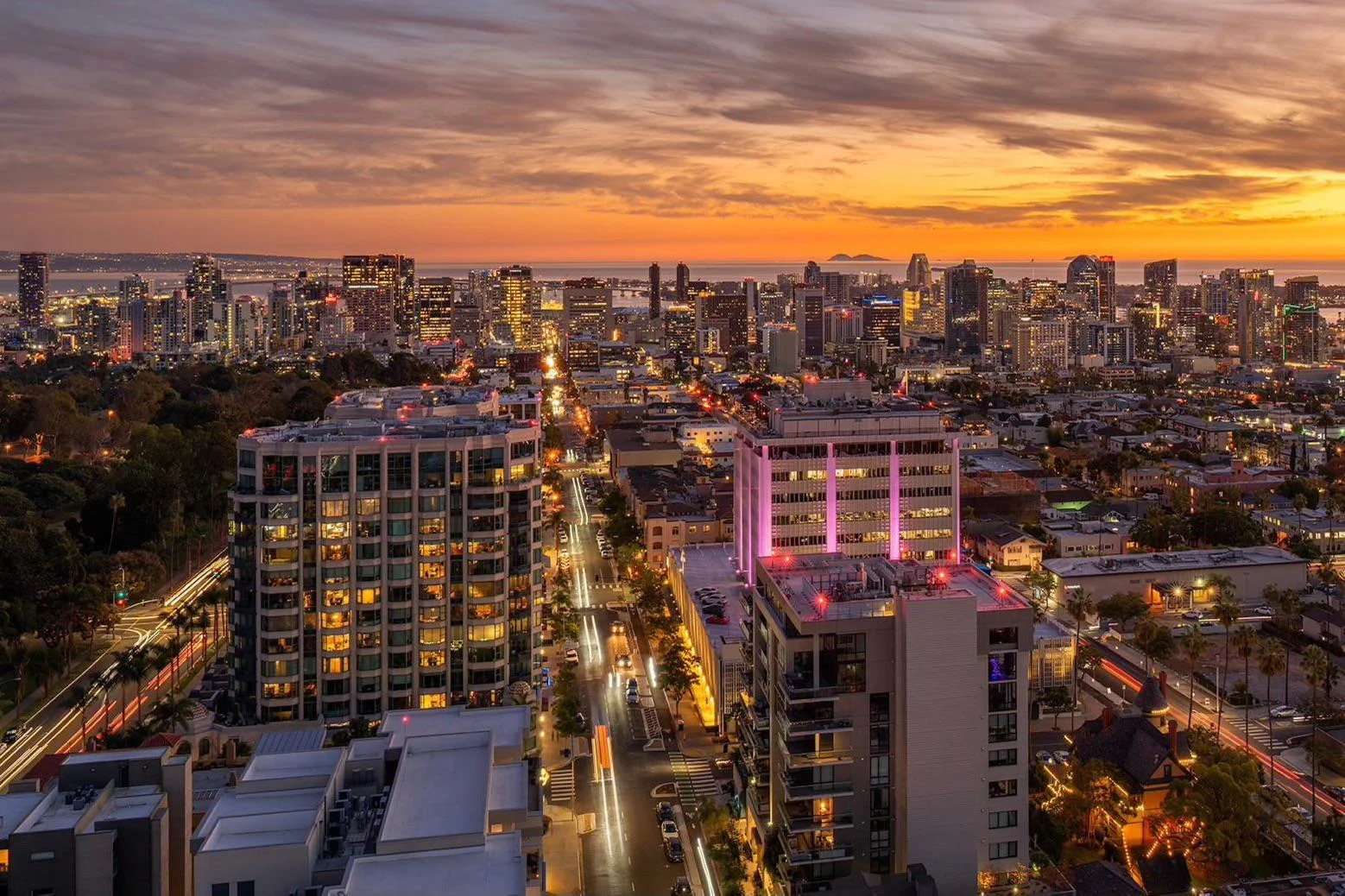
We inspect, photograph, measure, and meet the adjuster on the roof so the claim file reflects the roof's real condition — from Sorrento Valley lab buildings to Otay Mesa logistics roofs to port-adjacent industrial sites.
Start a Request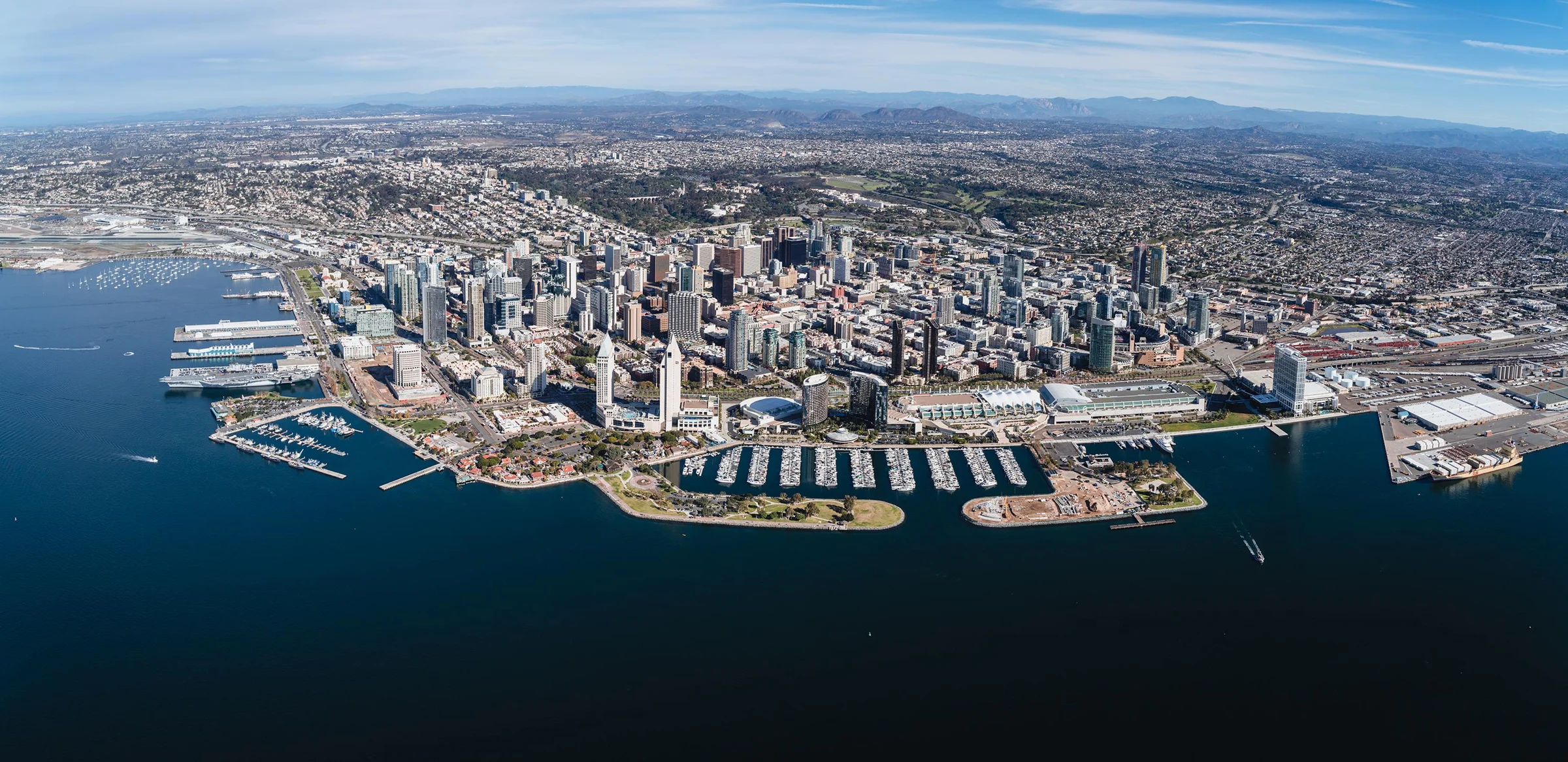
A commercial roof claim file is only as strong as the photo and measurement record behind it.
San Diego's roof stock ranges from coastal salt-air buildings to inland biotech and logistics roofs, and each needs its own documentation approach.
Photos and moisture readings tied to specific roof areas
On-roof coordination with your insurance adjuster
Complete repair and replacement scopes, not vague estimates