

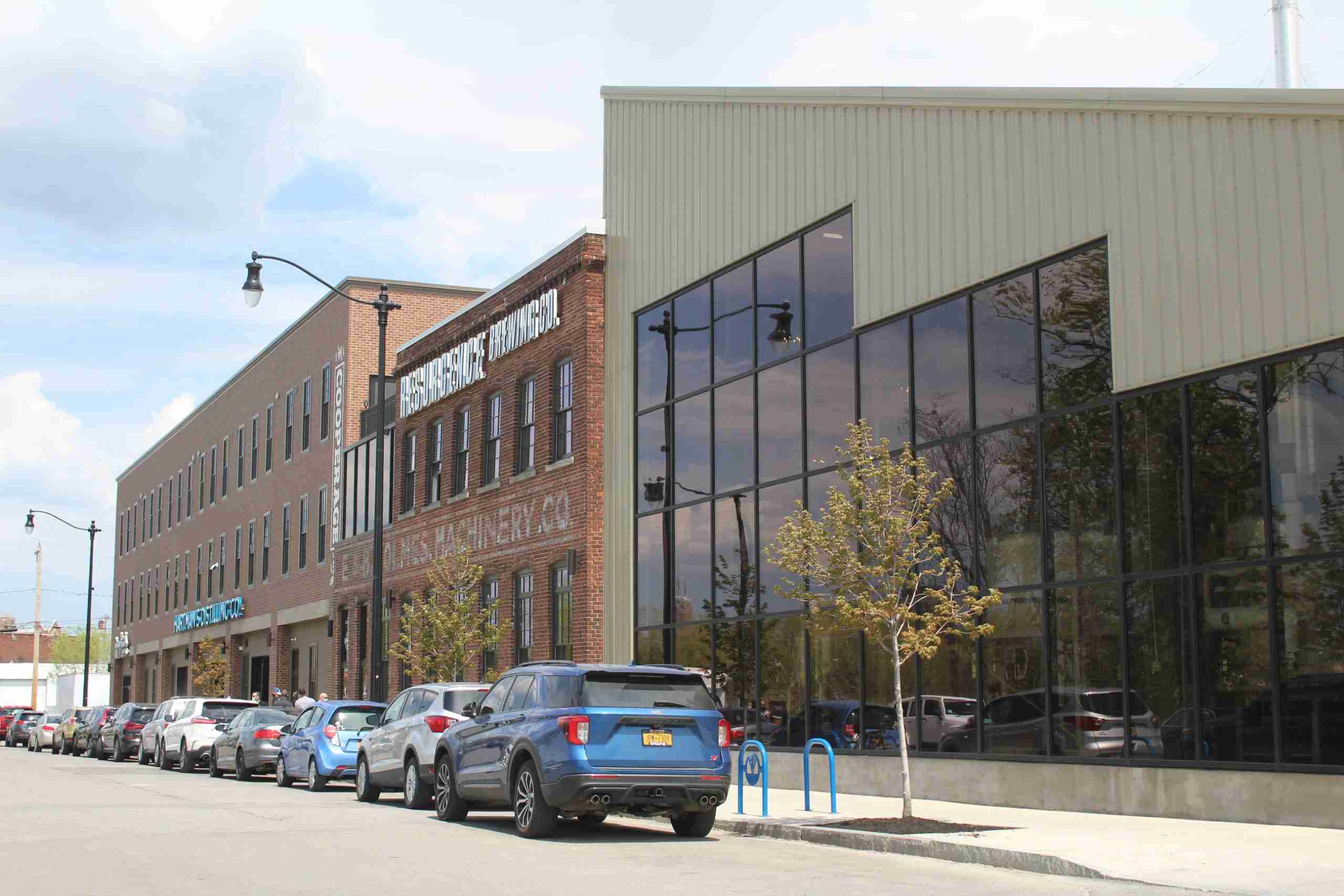
Brewery, Distillery & Food Production Roofing work in San Diego starts with roof condition, access, drainage, existing assembly, occupant impact, and whether repair, restoration, maintenance, or replacement is the practical next step.
Request a quoteCommercial roofing for brewery, distillery & food production roofing in San Diego, CA, specifications, scheduling, and project coordination for this building type.
The technical challenge that distinguishes brewery, distillery, and food production facility roofing in San Diego from standard commercial work is vapor control. Active fermentation generates CO₂ and steam; brew kettles and heat exchangers produce sustained moisture loads; and the building's humidity management systems are often fighting to maintain a reasonable interior condition year-round. The vapor pressure profile of a production brewery is closer to a natatorium than a warehouse, and an insulation assembly that works for a warehouse will fail within a few seasons in a brewing environment. We design the vapor control layer for the actual conditions, not for a generic commercial occupancy classification.
Membrane selection for brewery roofing in San Diego is driven by chemical compatibility. Sanitation chemicals used in production facilities, caustic soda, peracetic acid, chlorinated cleaners, sanitizing acids, migrate onto the roof surface through HVAC drainage, process exhaust condensate, and roof drain overflow from cleaning operations. TPO and PVC membranes resist these chemicals significantly better than EPDM. Heat-welded seams perform better than adhesive-bonded seams in chemical-exposure environments because adhesive bond strength degrades faster than welded thermoplastic seam strength under chemical attack. We specify TPO or PVC for brewery and distillery roofs, not because it's our preference, but because the chemistry requires it.
Equipment loads on brewery and distillery roofs in San Diego are substantial and frequently underestimated. Grain silos, CO₂ recovery systems, cooling water towers, high-capacity HVAC handling humidity loads, and process exhaust fans all impose point and distributed loads on the roof plane. Before specifying any new insulation assembly, which adds load, we review the structural drawings with the building's engineer of record to confirm the deck can carry the proposed assembly weight plus all existing equipment. We've found overstressed roof sections at more than one production facility.
In San Diego's climate zone, a correctly designed brewery roof assembly positions a high-perm vapor retarder below the insulation and a low-permeance membrane above it, creating a one-way vapor drive that allows moisture to dissipate through the membrane rather than accumulating in the insulation. The specific position and permeance value of the vapor retarder is calculated from the interior relative humidity of the production space (which may run 60-80% in an active brewery) and the exterior climate conditions. A generic commercial vapor retarder specification assumes 35-40% interior RH, not brewery conditions.
Polyisocyanurate (polyiso) insulation maintains its R-value well in dry conditions but loses performance at elevated moisture content, above 2% moisture by weight, polyiso can lose 25-30% of its rated R-value. For high-humidity production facilities, we recommend closed-cell spray polyurethane foam (SPF) as an alternative for the base layer, it has lower moisture absorption and maintains R-value better in brewery and distillery environments. The insulation specification for a production facility is a different engineering decision than for a warehouse or office building.
60-mil or 80-mil TPO or PVC fully adhered or mechanically attached, with heat-welded seams. The chemical resistance of TPO and PVC to alkalis, acids, and disinfectant compounds is significantly better than EPDM. Heat-welded seams are more resistant to chemical penetration than adhesive-bonded seams because the weld fuses the membrane into a monolithic joint with no adhesive interface to degrade. For roofs with direct chemical splash exposure at drain locations or exhaust terminations, we install stainless steel protection plates around the highest-exposure penetrations.
CO₂ exhaust vents from fermentation vessels require penetration flashings that allow for thermal movement, CO₂ exhaust vents can run significantly warmer than ambient when active, and that keep the membrane face away from direct exhaust contact. We use stainless steel curb extensions with PVDF-coated flanges for brewery exhaust penetrations, with membrane termination at the curb top rather than wrapping over the exhaust pipe. This keeps the membrane face away from the direct exhaust stream and allows the curb to handle the thermal cycling independently of the membrane.
Wet polyiso insulation in a brewery environment doesn't recover when it dries, at the moisture levels typical in production facilities, insulation that has been wet for more than one season is degraded. We remove all wet insulation discovered during tearoff, document the extent with photographs and core sample records, and replace it as part of the re-roofing scope. If wet insulation extends into areas not originally in scope, we bring the additional area to the owner's attention with photographic documentation and a unit-price change order before proceeding.
Brewery, Distillery & Food Production Roofing needs a roof scope that respects access, interior protection, rooftop equipment, drainage paths, and work-hour limits for that facility type.
Start a Request
A practical roof scope tells the owner what is urgent, what can wait, what needs testing, and which details change the budget.
San Diego roof work should account for marine air, reflective roof requirements, tenant operations, drainage, and rooftop service traffic.
Photos tied to roof areas, drains, penetrations, and sheet metal
Repair, coating, recover, replacement, and maintenance paths separated
Access, staging, tenant notices, work hours, and daily dry-in reviewed