

Movie Theater & Cinema Roofing work in San Diego starts with roof condition, access, drainage, existing assembly, occupant impact, and whether repair, restoration, maintenance, or replacement is the practical next step.
Request a quoteA movie theater is structurally unlike any other retail building, and its roof reflects that. The auditoriums are wide clear-span boxes with no interior columns, the rooftop carries a dedicated HVAC unit for nearly every screen, and the entire experience depends on the audience never hearing the weather. We build cinema and theater roofs in San Diego around those three facts. The market runs from the big stadium-seating multiplexes anchoring centers like Westfield UTC, Fashion Valley, Mission Valley, and Otay Ranch Town Center, to the destination luxury-recliner houses, to the independent and historic single-screen theaters in neighborhoods like North Park, Hillcrest, and La Jolla. Each one puts a different roof under a similar set of demands.
A multiplex with eight to twelve screens carries auditorium roof spans that can run from roughly eighty to a hundred and fifty feet with nothing underneath to break them up. Those long spans flex and deflect under load in ways a chopped-up retail roof never does, and a fastener pattern copied from a strip-center template will fatigue at the seams over a deck like this. We specify fastener density and insulation attachment from the actual deck type and span, not a default, and where deflection is a real concern we'll move to an adhered or hybrid system to keep concentrated point loads off the seam lines.
The rooftop of a typical San Diego multiplex is genuinely crowded. Each auditorium tends to get its own dedicated rooftop HVAC unit, and on top of that you've got concession-stand exhaust, lobby make-up air, and condensing units for the walk-in coolers and freezers feeding the food-and-beverage operation. The penetration count rivals buildings people think of as far more technical. Every curb, duct boot, and conduit run gets individually flashed and documented before new membrane goes over it, and the heavy-traffic lanes service techs walk between units get reinforced walkway pads so foot traffic doesn't wear the membrane through.
A flat low-slope deck over a quiet auditorium is also an acoustic surface. Rain drumming on a thin assembly, or an under-insulated deck transmitting HVAC and outside noise, lands directly in the middle of a screening. The insulation package on a theater roof does double duty, thermal performance and sound dampening, and we treat the assembly thickness and density as part of the guest experience, not just an energy-code line. It's one of the details that separates a cinema roof from a warehouse roof that happens to be the same size.
Cinemas are typically steel deck or concrete deck over structural steel, and the two demand different attachment strategies. Steel deck takes mechanical attachment directly, but older short-rib deck has lower fastener pull-out values than modern three-inch rib, so we verify deck type and gauge, and pull-test where warranted, before locking the specification. Concrete deck points toward adhered or ballasted systems where the structure allows. On any reroof we start with a core sample to read the existing insulation layers, check moisture content, and weigh the assembly in place before deciding between a recover and a full tear-off.
The common specification is 60-mil or 80-mil TPO mechanically attached over tapered polyiso. The tapered insulation matters here, decades of flat-roof ponding accumulate over big auditorium bays, and correcting drainage is often the single biggest extension you can give the membrane's service life. White TPO also satisfies the cool-roof energy-code requirements most San Diego jurisdictions now apply to commercial reroof permits. Where a theater is weighing rooftop solar, we coordinate the array layout and attachments with the membrane warranty up front rather than retrofitting around it later.
Theaters run afternoon through late night, seven days a week, which makes them behave like 24-hour buildings for scheduling purposes. We sequence tear-off and dry-in so every section is watertight before the evening screenings start, coordinate any HVAC shutdown windows needed for curb or penetration work, and keep the crew and the loading-dock access clear of evening opening procedures. The audience shouldn't know we were there.
A cinema isn't a single flat plane. The auditorium floor rakes downward toward the screen, and the roofline often steps with it, meaning a multiplex roof is usually a series of stepped and sometimes sloped sections at different elevations, joined by transition walls and tall parapets at the screen end. Those level changes and the tall screen-wall flashings are where water management gets tricky and where chronic leaks hide. We detail the step-downs, counterflashings, and through-wall transitions deliberately, treat each elevation change as its own watershed, and make sure drainage moves cleanly from the high projection-side roof down across the stepped sections without dumping onto a lower membrane. Older theaters that have been re-roofed piecemeal almost always have a weak transition somewhere in that stepped geometry, finding it is half the inspection.
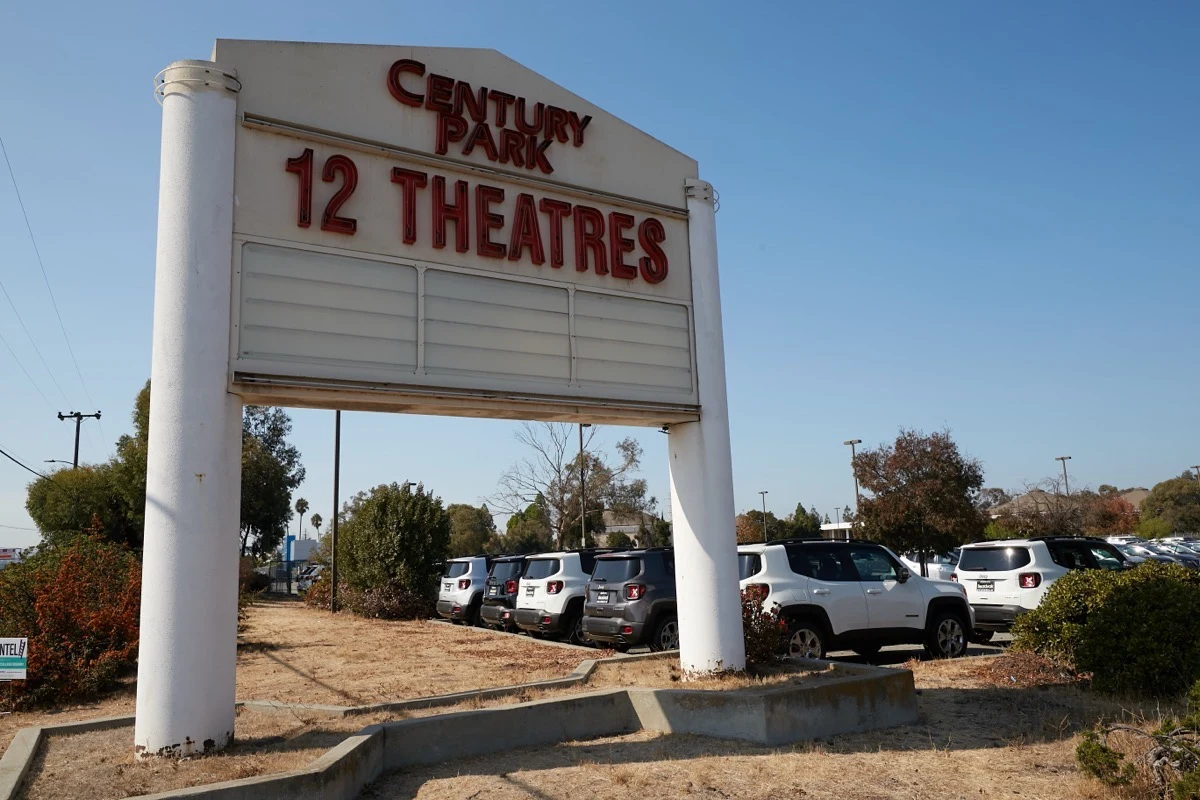
Entry canopies and marquee supports penetrate the roof and connect to the building at transitions that are the classic chronic-leak point on older theaters. We treat every marquee fastener and canopy support as an individual flashing item and re-flash the canopy-to-building transitions as standard scope, because a leak that starts at the entrance will track inward and get blamed on the auditorium roof.
If you operate a multiplex, a luxury cinema, or an independent theater anywhere from UTC to North Park and the roof is ponding, leaking at the entry, or carrying tired per-screen HVAC, we'll walk it, pull a core, and build a fixed-price scope that keeps the houses dark and dry. Send the building location and we'll schedule the assessment.
Movie Theater & Cinema Roofing needs a roof scope that respects access, interior protection, rooftop equipment, drainage paths, and work-hour limits for that facility type.
Start a Request
A practical roof scope tells the owner what is urgent, what can wait, what needs testing, and which details change the budget.
San Diego roof work should account for marine air, reflective roof requirements, tenant operations, drainage, and rooftop service traffic.
Photos tied to roof areas, drains, penetrations, and sheet metal
Repair, coating, recover, replacement, and maintenance paths separated
Access, staging, tenant notices, work hours, and daily dry-in reviewed