

Airport Terminal & Aviation Facility Roofing work in San Diego starts with roof condition, access, drainage, existing assembly, occupant impact, and whether repair, restoration, maintenance, or replacement is the practical next step.
Request a quoteAirport terminal and aviation facility roofing in San Diego, CA, San Diego International Airport and surrounding general aviation and cargo facilities.
Aviation roofing does not follow a normal commercial timeline, and pretending it does is how projects go sideways. San Diego International (SAN) is one of the most space-constrained single-runway airports in the country, sitting on a tight footprint between the bay and downtown, and it runs around the clock, which means every access point, material lift, and crew movement has to be coordinated with the airport's facilities department and its FAA Part 139 safety program, and in places with TSA security. We work that coordination into the scope before the contract is signed, not after the crew shows up at the gate.
The demand here is real and high-value. SAN's roughly 3.4-billion-dollar New Terminal 1 program is rebuilding the airport's oldest concourse with a much larger gate count, and the region's aviation infrastructure extends well beyond the commercial terminal: Marine Corps Air Station Miramar (NKX) carries extensive maintenance and squadron facilities for the Marines' F/A-18 and MV-22 fleets and hosts the Miramar Air Show, and Gillespie Field (SEE) in El Cajon serves as the primary general-aviation reliever east of the city. Together they generate some of San Diego's most demanding commercial roofing work, and they do it in a mild coastal climate that still throws a persistent marine layer and salt-laden air at every assembly, so corrosion resistance is never optional even when the weather looks easy.
Terminal roofs are large, low-slope expanses, and at that scale drainage design is the whole game, ponding tolerance is effectively zero because there is so much area feeding so few drains. Most terminal reroofing here runs a TPO or PVC single-ply over a tapered insulation package built specifically to move water and eliminate the flat spots that pond and accelerate membrane wear. The flip side of all that area is the equipment on it: terminal HVAC is denser and heavier than standard commercial, so the curbed-penetration count is high and the flashing maintenance touchpoints are frequent. We document every penetration, curb height, and mechanical clearance during the pre-project survey and engineer the oversized-curb and complex through-penetration details individually rather than reaching for a standard pattern.
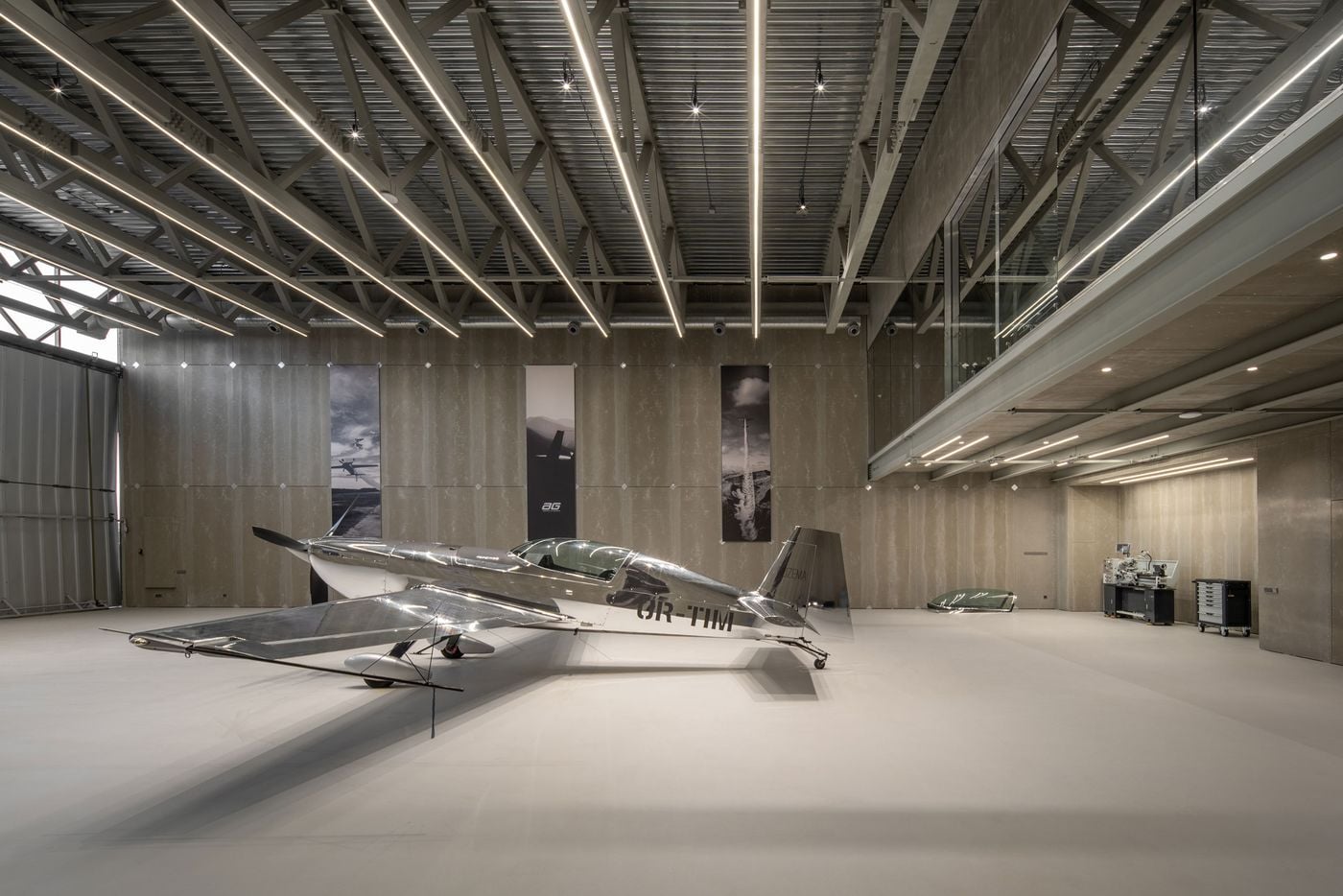
Roofs on the airside face loads a logistics building never sees. Jet blast and the open exposure near aprons and gates push the membrane adhesion and ballast requirements above what you would specify for a comparable warehouse, and the coastal wind exposure compounds it. We spec attachment and seam geometry for those conditions deliberately, and on the high-bay hangar structures at Miramar and the general-aviation fields, wide-flange steel or pre-engineered metal buildings with wide clear spans, we match the fastening pattern and standing-seam detailing to the uplift and thermal movement those buildings actually generate.
Aviation-adjacent buildings are their own category, cargo facilities, the rental-car center, FBO hangars, aircraft-maintenance shops, and on-airport hotels each roof differently from the terminal, but the airport-coordination requirement never disappears. Badging and security access at any part of an airport campus is non-negotiable, and our crews treat it that way: it is planned for and built into the bid timeline, not discovered onsite. For airside work specifically, we do not mobilize a crew member without confirmed authorization, because that is a baseline requirement we enforce rather than a favor we ask.
We develop a phased plan with the airport facilities department and the FAA Part 139 coordinator and get it approved by airport operations. Material deliveries, crane lifts, and any work near airside areas are scheduled into approved windows and coordinated through the FAA NOTAM process where required. This is a standard part of our project setup, not an exception.
Most terminal reroofing here uses a TPO or PVC single-ply over a tapered insulation system designed to improve drainage and eliminate ponding. New high-bay aviation structures and hangars often call for standing-seam metal. The choice depends on the existing deck, load capacity, and operational constraints, so we develop the specification after walking the roof with your facilities engineer.
Terminal HVAC density runs well above standard commercial. Our pre-project survey documents every penetration, curb height, and mechanical clearance before we build the work plan, and the flashing for oversized equipment curbs and complex through-penetrations is engineered individually rather than using a standard pattern.
Yes, with appropriate badging and in full coordination with airfield operations. Airside work requires a higher level of pre-planning and crew credentialing, which we build into the bid timeline. We do not mobilize crew members without confirmed airside authorization, that is a baseline requirement we enforce.
Yes. General-aviation hangar roofing, a single private hangar or a multi-unit FBO complex, is a regular part of our work in San Diego. High-bay hangars on wide-flange steel or pre-engineered building systems need a contractor who understands their specific uplift and thermal-movement behavior, and we spec and install for it.
Airport Terminal & Aviation Facility Roofing needs a roof scope that respects access, interior protection, rooftop equipment, drainage paths, and work-hour limits for that facility type.
Start a Request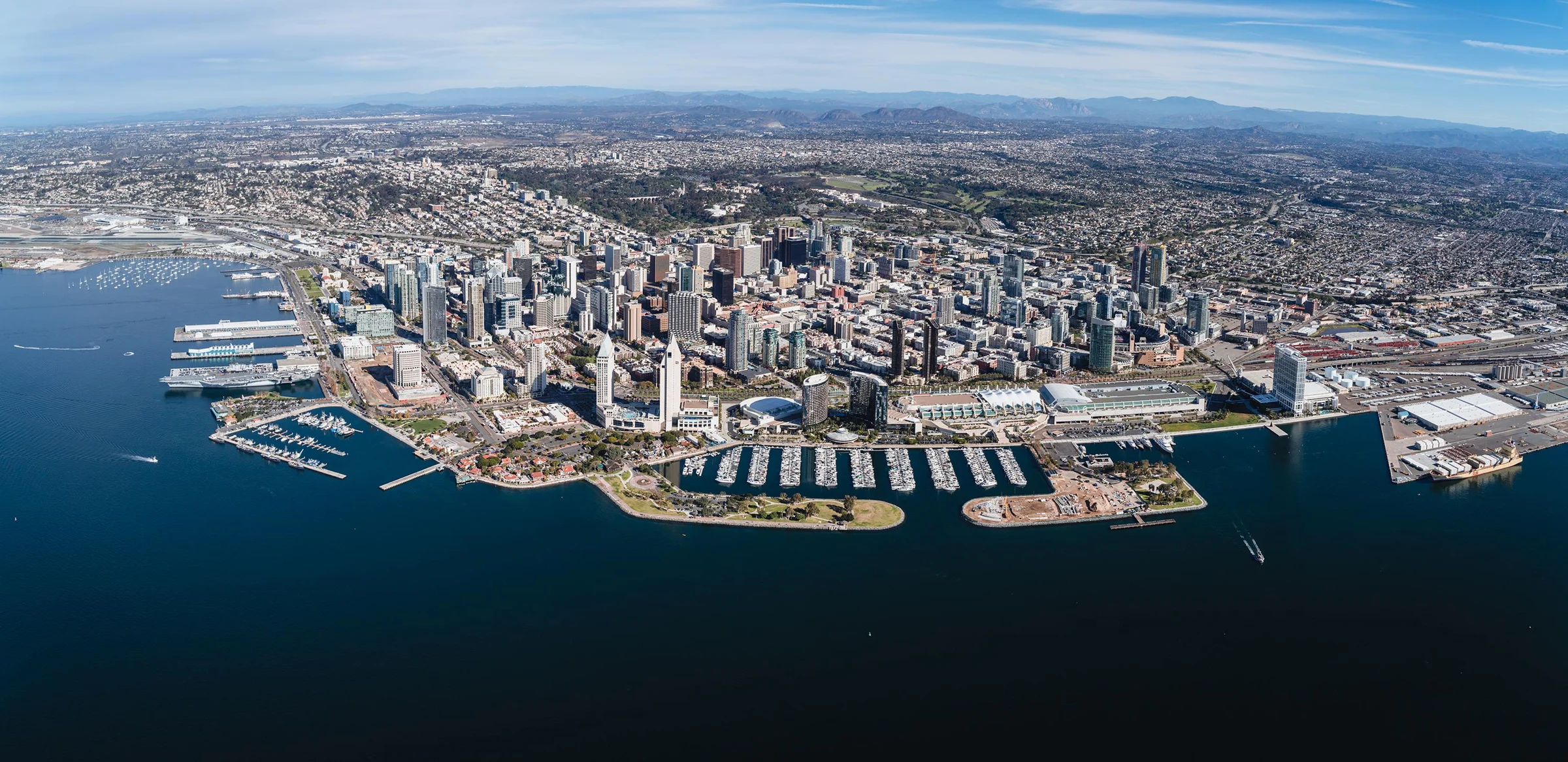
A practical roof scope tells the owner what is urgent, what can wait, what needs testing, and which details change the budget.
San Diego roof work should account for marine air, reflective roof requirements, tenant operations, drainage, and rooftop service traffic.
Photos tied to roof areas, drains, penetrations, and sheet metal
Repair, coating, recover, replacement, and maintenance paths separated
Access, staging, tenant notices, work hours, and daily dry-in reviewed