

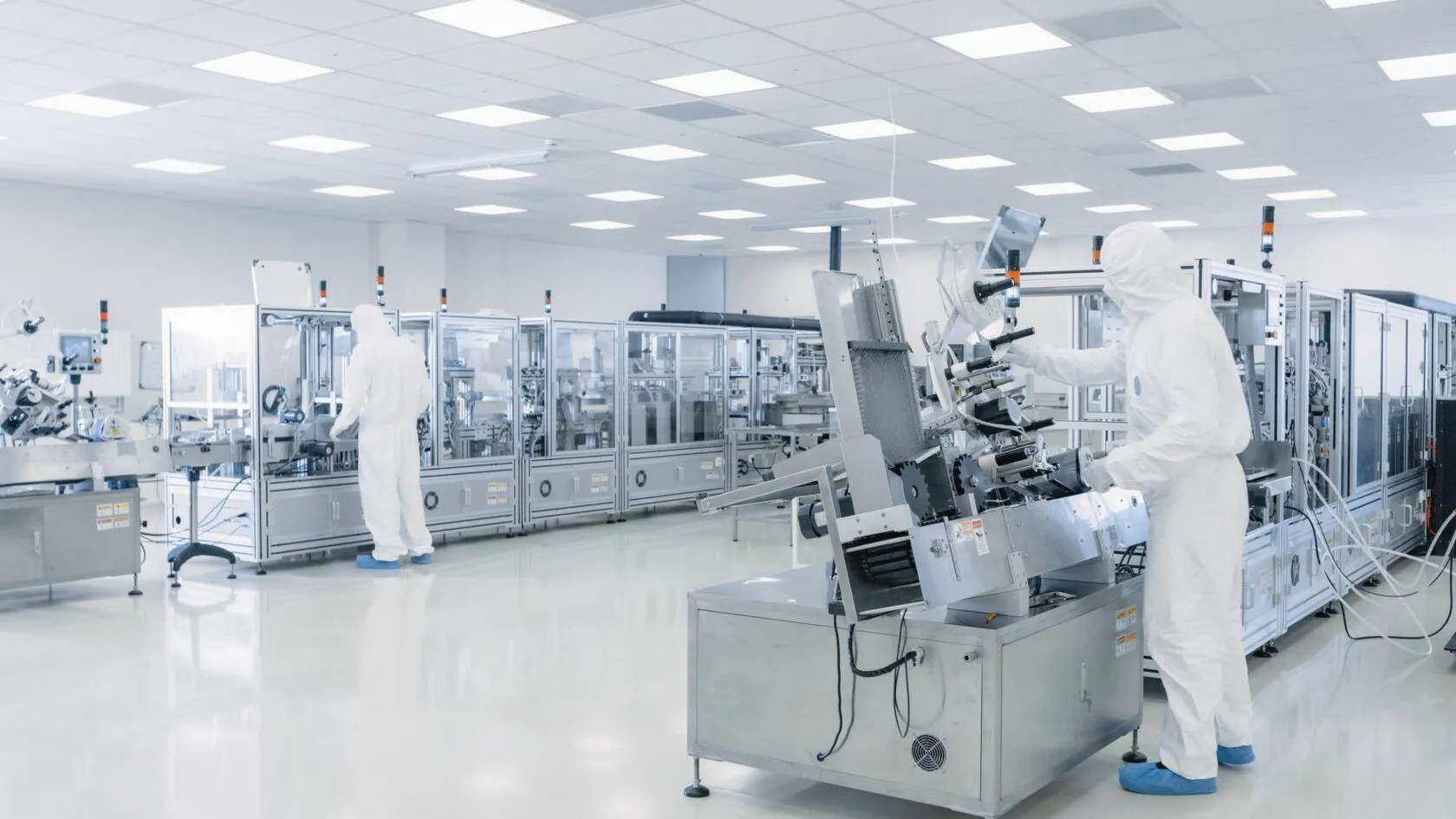
Pharmaceutical & Laboratory Roofing work in San Diego starts with roof condition, access, drainage, existing assembly, occupant impact, and whether repair, restoration, maintenance, or replacement is the practical next step.
Request a quoteSan Diego is one of the three largest life-science clusters in the United States, and the roofs above it carry stakes that ordinary commercial buildings never do. A single drip onto a bioreactor, a sequencing instrument, or a GMP fill line can mean a quarantined batch, a contaminated study, and a regulatory event that costs more than the entire roof. We approach pharmaceutical and laboratory roofing in San Diego as a controlled operation on a sensitive building, not as a roof that happens to sit over a lab. The work centers on the Torrey Pines mesa research campuses, the University City and Sorrento Valley biotech parks along Genesee and Towne Centre Drive, and the growing GMP manufacturing footprint pushing into Sorrento Mesa and Torrey Reserve.
These buildings share a problem set that standard roofers are not staffed to handle: credentialed access, dense and corrosive rooftop mechanical, cleanroom pressure relationships that can't be disturbed, and closeout documentation that has to satisfy a quality system, not just a property manager. We plan all four of those into the project before a single fastener is driven.
On an active pharmaceutical or biotech campus, a crew that arrives without pre-cleared credentials doesn't lose an hour, it loses a mobilization day, and on a controlled-substance or BSL-rated site it can trigger a security or compliance incident. We initiate credentialing during preconstruction, typically two to three weeks out, so background checks, site-specific safety orientation, escort arrangements, and any DEA or facility-security clearances are settled before the start date. Gowning expectations, restricted-path routing across the roof, and badge-in/badge-out logging all get written into the access plan rather than improvised on day one.
Walk the roof of a San Diego biotech building and you'll find a forest of equipment: dedicated air handlers maintaining ISO-classified cleanroom environments, chemical fume exhaust with corrosive vapor streams, biosafety exhaust stacks with HEPA housings, glycol and process-chilled-water lines, and building-automation conduit feeding pressure and particle sensors. Each of these penetrates the membrane, and each gets individually flashed and individually documented. There is no field of repeated stock details here, the penetration cluster on a research building rivals a hospital or a data center, and we treat it that way.
The single most overlooked failure mode on lab roofs is chemical attack from the building's own exhaust. Solvent and acid vapors leaving fume-hood and process stacks condense on the stack housing and drip onto the surrounding membrane, creating localized chemical burns that standard warranties exclude. Before we specify membrane in the zones around exhaust stacks, we work with the facility's MEP and EH&S teams to identify the actual exhaust stream, what solvents, what concentrations, what discharge pattern. We typically specify reinforced PVC or KEE single-ply for its chemical resistance, and we step up the specification in the stack-adjacent zones rather than assuming one membrane serves the whole roof. Standard TPO does not belong downwind of a solvent stack.
Cleanrooms hold their classification through carefully balanced positive or negative pressure relationships, and any roof work near cleanroom supply or exhaust connections can disturb that balance. We coordinate penetration work with the facility MEP team around planned HVAC windows, confirm pressure-differential recovery once flashing is complete, and protect against dust or debris migrating into air paths above the cleanroom envelope. On the most sensitive zones we'll stage the work so a space can be requalified after we leave if the facility's quality system requires it.
Some assets under these roofs cannot get wet under any circumstances, cold-storage vaults holding clinical material, cleanroom fill lines, high-value analytical instruments. Over those zones we don't rely on a single membrane layer as the only line of defense. We build redundancy into the assembly, sequence tear-off so no sensitive area is ever left exposed across a weather window, and keep temporary dry-in materials staged on the roof for the duration. The standard here isn't "watertight by code." It's "this area never sees a drop."
Much of San Diego's wet-lab inventory is multi-tenant, incubator and shell-and-core lab buildings where each suite runs its own HVAC and its own exhaust serving a different research program. That multiplies the coordination: more stacks, more pressure zones, more parties to notify. On university and institutional research buildings we're also coordinating with Institutional Biosafety Committees and Environmental Health & Safety offices, whose sign-off gates the work. We map the tenant and program layout before we sequence anything.
The Torrey Pines and University City research mesas sit close enough to the coast that salt-laden marine air is a constant on these rooftops, and it works on the dense field of stainless, galvanized, and aluminum mechanical faster than buyers expect. We isolate dissimilar metals at curbs and fasteners, specify corrosion-resistant edge metal and terminations, and account for the marine exposure in the membrane and flashing details so the roof and the equipment it carries age at the same pace. Vibration is its own consideration: electron microscopes, mass spectrometers, and other ultra-sensitive instruments sit on isolation slabs, and rooftop equipment work and even fastening operations have to be coordinated so we don't introduce vibration into a space mid-measurement. And because so many San Diego life-science owners are adding rooftop photovoltaics to offset the enormous HVAC and process loads these buildings draw, we coordinate any solar array layout, ballast, and attachment with the membrane warranty and the existing penetration field up front, not as a retrofit that voids the roof we just installed.
Closeout on a regulated building is its own deliverable. We assemble contractor qualification records, the site-specific safety plan, reviewed material submittals, daily work reports, manufacturer installation documentation, FM Global or UL system certification where the building requires it, and registered NDL warranty paperwork, formatted to move through the facility's document-control process. The package is built so a quality manager can file it and an auditor can find it.
If you manage a biotech, pharmaceutical, or research building anywhere from Torrey Pines to Sorrento Mesa and the roof is aging into the risk zone, we'll walk it under your access protocols and build a scope that respects what's underneath it. Send the building location and we'll arrange a credentialed assessment.
Pharmaceutical & Laboratory Roofing needs a roof scope that respects access, interior protection, rooftop equipment, drainage paths, and work-hour limits for that facility type.
Start a Request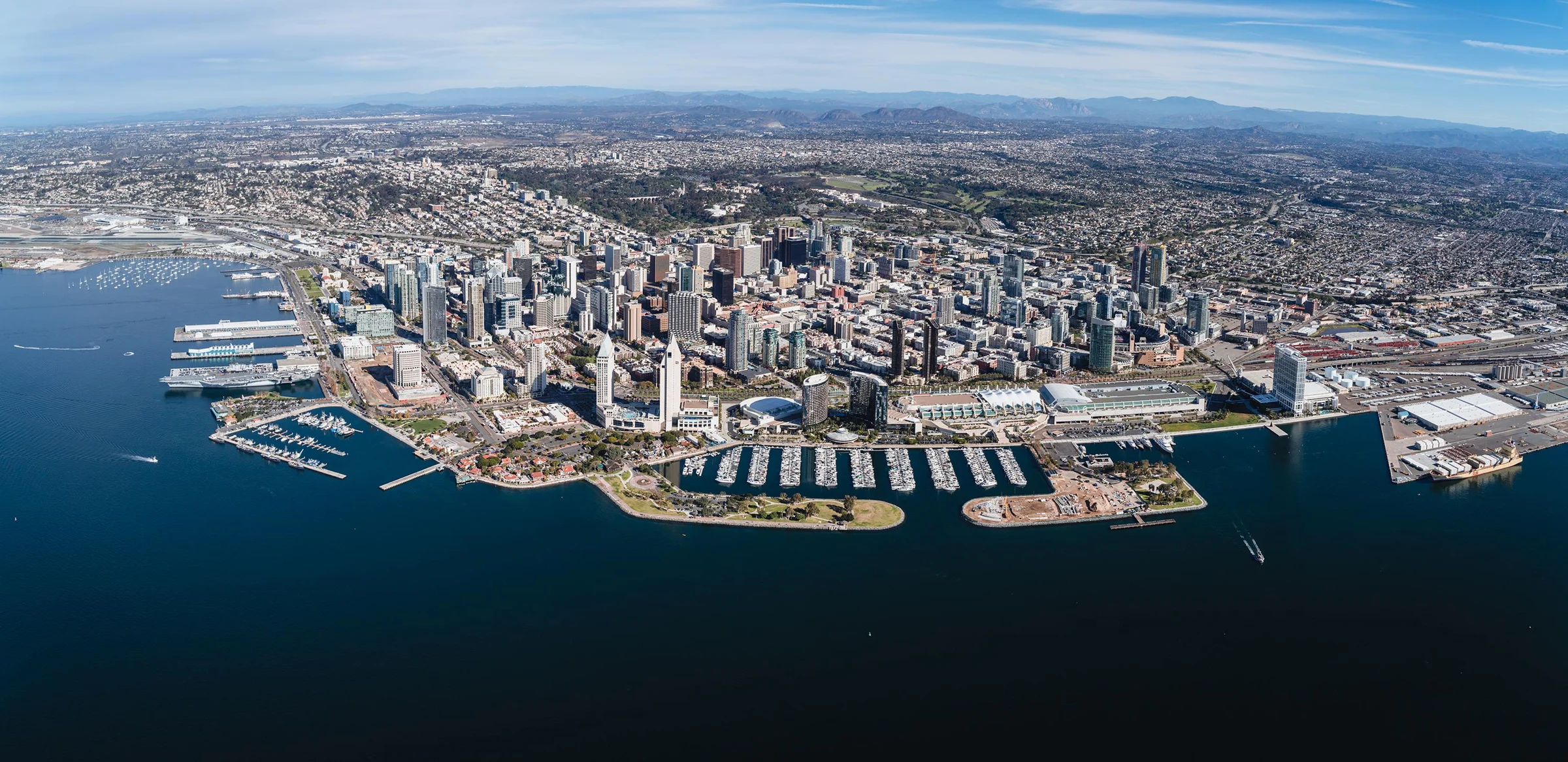
A practical roof scope tells the owner what is urgent, what can wait, what needs testing, and which details change the budget.
San Diego roof work should account for marine air, reflective roof requirements, tenant operations, drainage, and rooftop service traffic.
Photos tied to roof areas, drains, penetrations, and sheet metal
Repair, coating, recover, replacement, and maintenance paths separated
Access, staging, tenant notices, work hours, and daily dry-in reviewed