

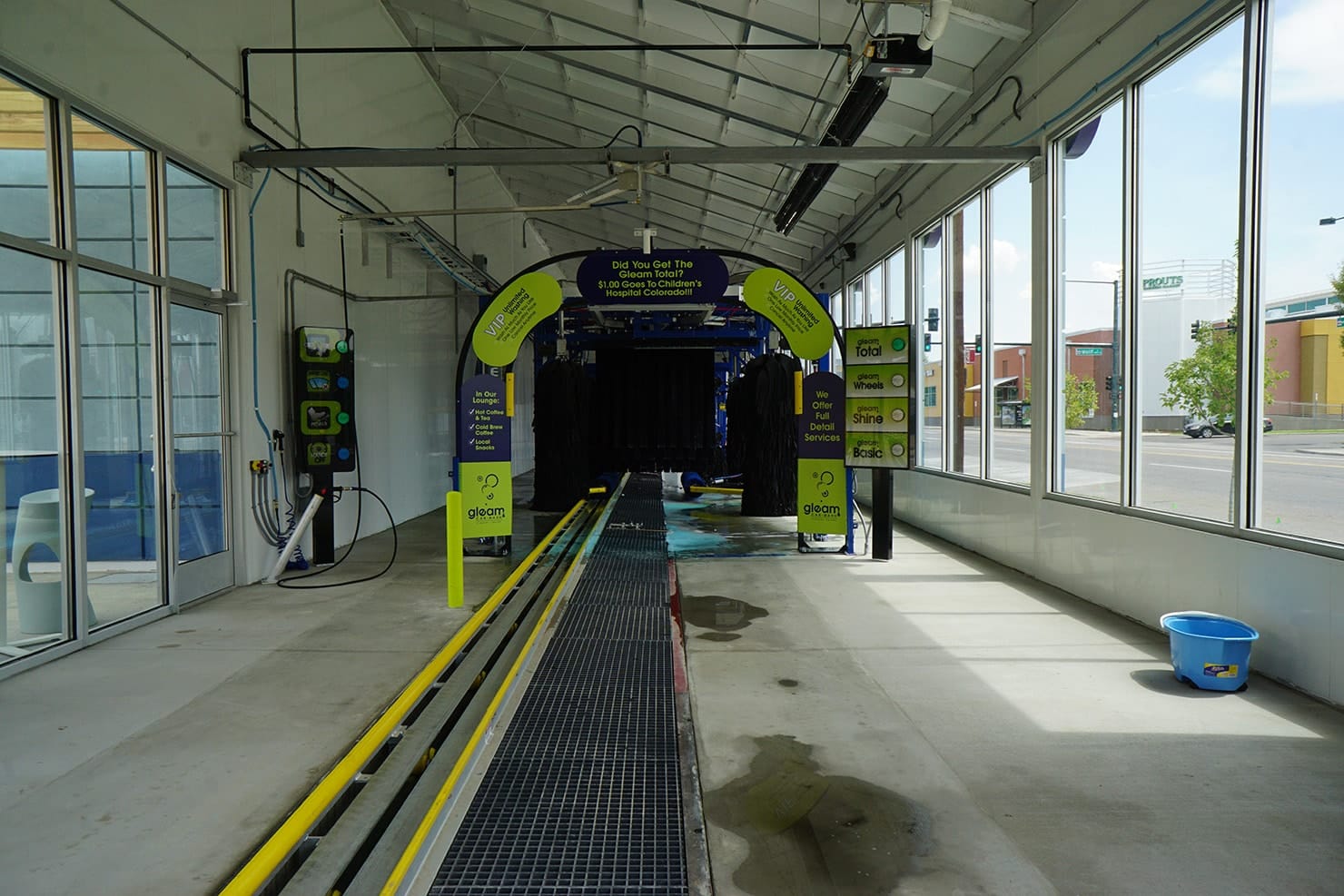
Car Wash Facility Roofing work in San Diego starts with roof condition, access, drainage, existing assembly, occupant impact, and whether repair, restoration, maintenance, or replacement is the practical next step.
Request a quoteA car wash roof fails from the inside out. While most commercial buildings degrade from sun and weather above the membrane, a wash facility is attacked from below, by warm, saturated air carrying detergent mist, tire-dressing solvents, wax compounds, and rust inhibitors that rise off the tunnel and condense on the underside of the deck. We build car wash roofs in San Diego around that reality. Along the Miramar Road auto-services corridor, the El Cajon Boulevard commercial strip, and the high-volume express washes clustered near the I-805 and SR-94 interchanges, the operators who call us have usually already watched a standard roof rust out at the fasteners and weep at the seams years before its warranty said it should.
San Diego's car wash market keeps growing because the climate cooperates, low rainfall and long dry stretches mean more wash days per year than almost anywhere in the country, and the express-tunnel model has multiplied along Convoy Street, Clairemont Mesa Boulevard, and through National City and Chula Vista. That same dry, mild air outside makes the contrast inside the tunnel worse: the building envelope holds heat and moisture against a deck that never fully dries out. The roof above an active wash bay is, functionally, the lid on a chemical steam chamber.
The destructive cycle on a car wash roof runs in three layers. First, vapor. High-pressure hot water and the full menu of detergents, foaming presoaks, and drying agents aerosolize during every cycle and rise into the structure. Second, condensation. That vapor reaches the cooler underside of a metal deck or the topside insulation and condenses, depositing alkaline and solvent residue exactly where you can't see it. Third, corrosion and adhesion failure. The residue eats galvanized fasteners and deck flutes from the underside, while on top the same chemistry, when exhausted onto the roof, breaks down membrane plasticizers and seam welds. A roof can look intact from the parking lot while the structural deck beneath it is actively rusting through.
This is why we never quote a car wash off a generic single-ply template. The membrane has to be chosen for chemical exposure, the deck has to be evaluated for existing corrosion, and the vapor drive has to be managed so the assembly can dry. Getting any one of those wrong shortens the roof life by years.
Not every single-ply membrane survives car wash chemistry equally. The alkaline detergents and wax compounds standard to commercial wash programs are hard on TPO and EPDM over the long term, EPDM in particular is vulnerable to the petroleum-based tire dressings and solvents. For the active tunnel and bay zones, we typically specify PVC or KEE single-ply, whose plasticizer chemistry holds up far better against the detergent and solvent exposure that defines this building type. We confirm the specific chemical program the wash actually runs before we finalize a membrane, because a high-end ceramic-coat and graphene-wax operation puts different stress on a roof than a basic soap-and-rinse express lane.
For the non-tunnel portions, the equipment and pump room, the customer pay area, the office, the exposure drops sharply and a fully adhered TPO or PVC assembly is appropriate and more economical. We zone the roof by exposure rather than treating the whole building as one specification, which keeps the budget honest while putting the chemical-grade system only where it's earned.
Wash tunnels move enormous volumes of air. The high-capacity blowers, dryers, and tunnel exhaust fans that pull steam and chemical vapor out of the building penetrate the roof at oversized curbs, and those curbs are where most car wash roofs first fail. Continuous airflow, vibration from the blower motors, and the chemical plume itself all work against standard curb flashing. We oversize and reinforce these details, isolate dissimilar metals to slow galvanic corrosion, and treat every dryer and exhaust penetration as its own engineered detail rather than a repeated stock flashing.
In-bay automatics and self-serve bays carry less airborne chemical load than full express tunnels, but they bring their own problem: drainage. The flat low-slope decks over bay structures frequently pond, and standing water on a roof already under chemical and humidity stress accelerates every failure mode at once. On these properties we evaluate slope and drain placement first, and where ponding is chronic we design tapered insulation to move water to scuppers or drains so the membrane isn't sitting in a chemical bath after every cycle.
The freestanding vacuum canopies on the exit side of an express wash are a separate structure with separate failure points. They take vehicle exhaust, overspray, tire-dressing mist, and full outdoor thermal cycling, and the place they leak is almost always the canopy-to-building transition and the canopy drain connections. We include canopy covers, gutters, downspouts, and those transition details in every car wash scope, because a leak that originates at the vacuum canopy will track back into the main building and get blamed on the tunnel roof.
San Diego car washes run seven days a week through most of the year, and every closed hour is lost revenue. We sequence tunnel-roof work into early-morning and late-evening windows, keep each section dried-in before reopening, and handle exterior building and canopy work during operating hours with traffic control that keeps vehicles clear of the crew. The goal is a roof rebuilt around your wash schedule, not a wash schedule bent around our convenience.
If you operate an express tunnel, an in-bay automatic, or a self-serve wash anywhere from Oceanside to Chula Vista and the roof is rusting, weeping, or already past warranty, we'll walk it, pull the data, and give you a fixed-price scope built for what a car wash actually does to a roof. Send the building location and we'll schedule the assessment.
Car Wash Facility Roofing needs a roof scope that respects access, interior protection, rooftop equipment, drainage paths, and work-hour limits for that facility type.
Start a Request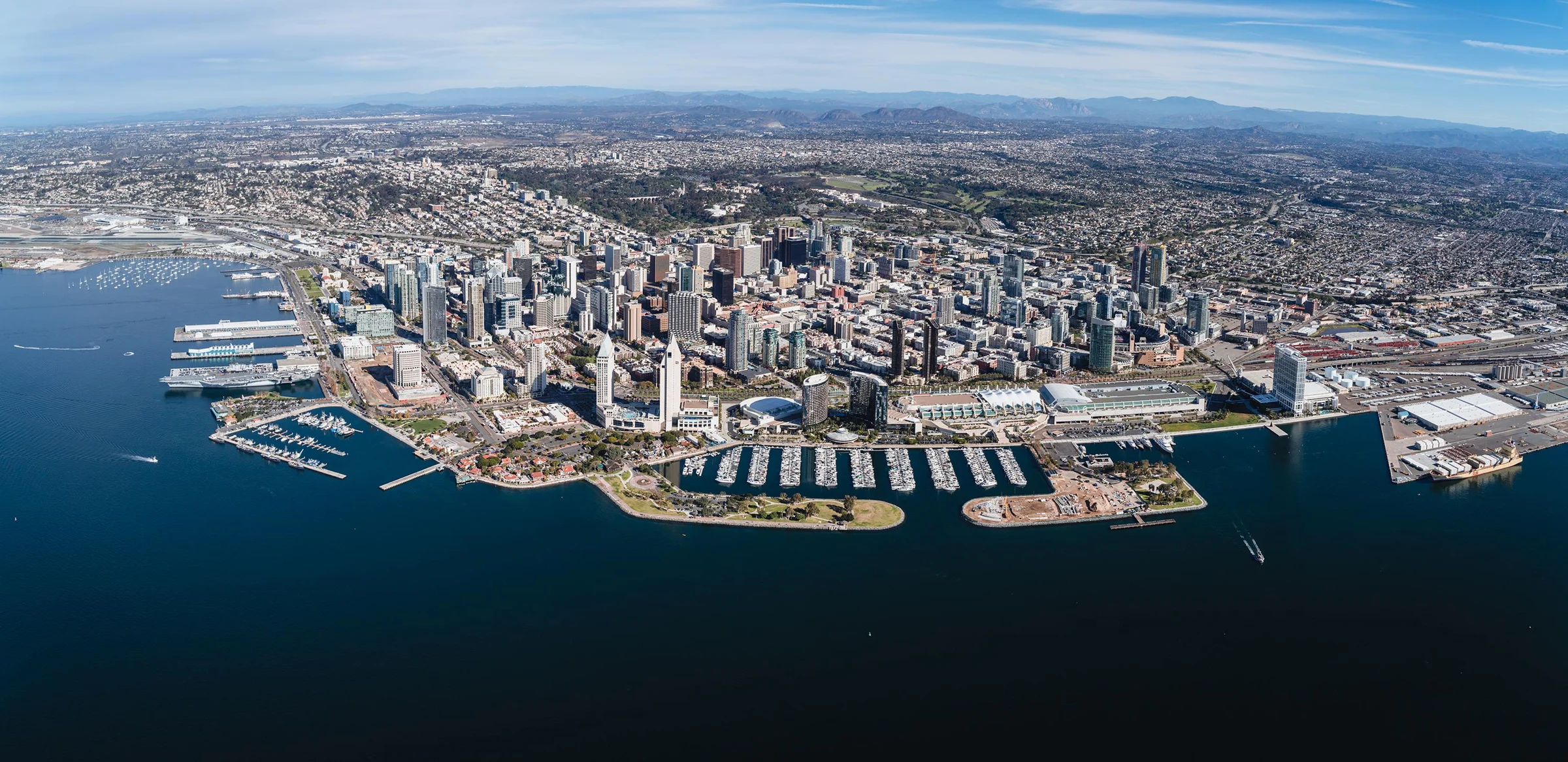
A practical roof scope tells the owner what is urgent, what can wait, what needs testing, and which details change the budget.
San Diego roof work should account for marine air, reflective roof requirements, tenant operations, drainage, and rooftop service traffic.
Photos tied to roof areas, drains, penetrations, and sheet metal
Repair, coating, recover, replacement, and maintenance paths separated
Access, staging, tenant notices, work hours, and daily dry-in reviewed